Choose to Feel Better for Longer: Healing Acupuncture Near Me for Naperville, IL
Our minds and our bodies are tough, but they cannot operate at full throttle without some wear and fatigue. Whether we’re dealing with recurring aches and pains or the daily stresses of life, we need rest and relief – a return to our peaceful selves.
We might try many remedies, such as improving our diet, relaxing or exercising more, seeing the doctor, pursuing therapy or taking prescribed pills. These approaches may provide us with a sense of comfort and resolution for a time. Eventually, however, the ailments return, and we seek ways to manage them again.
Perhaps you live or work in Naperville and contend with a symptom or condition such as:
- recurring stress
- anxiety
- depression
- headaches
- fatigue
- back pain
- neck pain
- shoulder pain
- digestive issues
- allergies
- dental pain
- hot flashes from menopause
- tinnitus (ringing in the ears)
- joint pain
- fibromyalgia
A Touch of Ginger restores your lasting connection to health and well-being by getting to the root of the problem. Rather than focus on interim comfort, we apply Chinese medicine to determine which organ system in your body is affecting you because it’s out of balance.
Acupuncture by A Touch of Ginger enhances quality of life for anyone in Naperville, from infants to seniors alike.
The Power of Acupuncture for Naperville (IL)
Health and well-being in Chinese medicine centers of the concept of qi (chee), which is the life force or energy that powers the body to perform. This essence courses through the body’s pathways with start and end points on the head, hands and feet.
When qi is abundant and moving correctly in concert with properly functioning organs, there is health. When qi is disrupted by a factor such as trauma, pathogens or disease, it becomes blocked and we begin to experience distress signals.
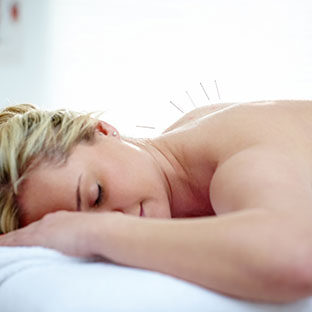
Acupuncture at A Touch of Ginger uses very fine needles on the skin’s surface to stimulate specific acupuncture points on the body. This stimulation frees the movement of your qi.
Our treatments provide meaningful therapy and pain relief for many different afflictions such as those identified above. It can even help Naperville residents who wish to stop smoking. For Naperville women, it can promote greater fertility by helping to regulate reproductive hormones and increase blood flow to the uterus.
Acupuncture Near Me for Naperville (IL): What’s Involved?
When you visit us to add to your health and well-being, your first appointment will be about 90 minutes. We’ll mainly review your medical history with you and learn about your main current ailment. We may also perform some other basic examinations.
From there, we will provide you with your specific acupuncture treatment based on our assessment of your condition. After your treatment, your acupuncturist will spend time discussing your thoughts or questions as well as your next acupuncture treatment.
Acupuncture for Naperville (IL): Does It Hurt?
The feeling of acupuncture varies with each person. You will typically notice a quick, gentle poke when the needle is inserted.
After that, people describe the sensation differently. Some people feel nothing, and others speak of gentle pressure, tingling or aching, all of which go away quickly.
Modalities & Herbal Medicine for Naperville (IL)
Chinese medicine also includes other forms of treatment that help to equalize imbalances and assist the body in restoring normal physiological function.
A wider personal pain-management plan might include modalities such as:
cupping. A pneumatic device in a cup creates suction that pulls up the skin, muscle, lymph fluids, blood and fascia. This draws deeply stagnated body fluids and qi to the surface, allowing the body to dispel them. It also brings fresh and nourishing oxygenated blood to the treatment area to heal tissues and improve circulation.
gua sha. Grapeseed oil is applied to the skin and a jade stone is rubbed briskly back and forth over the affected area. During this process, the practitioner is looking for sha, which presents as red, purple or pink color on the skin to show that energy is changing from stagnation to movement.
auricular acupuncture. Very small needles stimulate acupoints on the external ear surface. This promotes healing in other areas of the body. Just a few conditions that can be treated include pain, dental issues and emotional imbalances.
We develop herbal formulas for our Naperville patients according to the presentation of their symptoms as well. During an initial consultation for herbal medicine, the herbalist will feel your pulses on both wrists, view your tongue and palpate your abdomen. With the information gathered, the herbalist then will select a formula specific to your needs.
Our herbal pharmacy includes premium-granule extracts from Legendary Herbs. Their supplier, Tianjiang Pharmaceutical, was China’s first GMP-certified granule facility.
Our Canonical Chinese Medicine and herbal formulas can further serve you as preventive self-care. Beyond feeling relaxed and vitalized, our Naperville patients describe improved energy, immunity, digestion and sleep.
Acupuncture: East vs. West Perspective
Some of our Naperville clients appreciate having additional insight and context about the history and perspective of acupuncture as it compares between the East and the West.
Historically, acupuncture has been used for a broad range of conditions, including beyond the treatment of pain. Today in China, where the practice originated, acupuncture isn’t typically seen as an exotic or alternative treatment.
Rather, it exists alongside Western medicine such as surgery, antibiotics, imaging and pharmaceuticals. A Chinese hospital might have departments that offer acupuncture in addition to other Western biomedical medicine. In other words, acupuncture does not exist separately from modern healthcare.
In the West, acupuncture entered our awareness mainly as an exotic Eastern practice. It became especially popular in the U.S. in the 1970s.
It gained particular mainstream attention in 1971 when in his article in The New York Times, writer James Reston described receiving acupuncture for post-operative pain while accompanying National Security Adviser Henry Kissinger on a diplomatic trip to China.
As curiosity rose in the West, rather than accept qi and meridians as integral factors, Western researchers focused on acupuncture’s practicality: “Does acupuncture work, and if so, how?” To answer this, they examined it through clinical trials and physiology.
In this way, Eastern and Western viewpoints can vary in how they describe success through acupuncture because the same observed improvement may have a different conceptual framework.
A traditional Chinese practitioner might perceive progress as the patient’s qi no longer being stagnant and the body’s systems returning to balance.
A Western physician assessing the same patient might note that “stimulation of peripheral sensory nerves appears to influence central pain processing and endogenous analgesic mechanisms.”
While East and West medical approaches have moved closer together, how they drew nearer and how each has viewed acupuncture remain of relevant interest. The following table provides a direct comparison of East and West perspectives of acupuncture.
| Acupuncture | East (esp. China/Asia) | West (U.S., Europe) |
| Historical role | Part of an established medical system | Introduced greatly as an alternative/complementary therapy |
| Underlying theory | Qi, meridians, yin-yang, balance | Nervous-system stimulation, pain modulation, neurophysiology |
| Typical purpose | Broad range of health problems | Mainly pain and symptom management |
| Medical status | Integrated into conventional healthcare in China and some other Asian countries | Usually complementary or adjunctive medicine |
| Practitioner | May be traditional Chinese medicine practitioner or physician | Often a licensed acupuncturist; sometimes offered by physicians, physical therapists or other clinicians depending on the jurisdiction |
| Patient attitude | Often viewed as ordinary healthcare | More likely viewed as alternative or complementary medicine |
Acupuncture: Others Who’ve Used It
Several well-known people have been publicly associated with acupuncture. Some have personally described using it, while others were reported by the press.
Richard Nixon – His 1972 China trip helped bring acupuncture to widespread American public attention. Nixon witnessed acupuncture demonstrations, and his Air Force physician, Walter Tkach, subsequently wrote about what he had seen.
Gwyneth Paltrow – A highly prominent Hollywood advocate of acupuncture and traditional Chinese medicine, she’s been publicly associated with acupuncture, cupping and herbal medicine.
Kate Winslet – The actress well-known for her role in Titanic has been reported as using acupuncture.
Kim Kardashian – She has publicly shown herself receiving facial acupuncture as part of the celebrity wellness and beauty trend.
Olympic swimmer Michael Phelps also can be remembered for the circular marks from cupping seen on his body during the 2016 Olympics.
Acupuncture Near Me: Contact A Touch of Ginger Today
Our greatest reward is knowing that we can help you heal as well as feel greater peace. We know because we see and experience what acupuncture achieves for our Naperville patients. We welcome you to contact us at (630) 299-3464 to further discuss how we can help you be you again.
Naperville (IL) Acupuncture: Did You Know?
There is also an acupuncture practice known as battlefield acupuncture. It adds to the treatment’s illustrious history as an attempt to adapt an ancient Chinese-derived technique to modern military medicine, especially for treating acute pain without reflexively relying on drugs.
Battlefield acupuncture is a form of auricular acupuncture, meaning the needles are placed in specific locations on the ear rather than throughout the body. The technique was developed for military applications in 2001 by Dr. Richard Niemtzow, a U.S. Air Force physician and acupuncture practitioner.